

Democrats Take Congress: What It Means for Markets & the Economy


Updated 4 Nov 2026•3 min read

The much-awaited political event for this year, the US midterm elections were finally held on November 3, 2026. Most of the polls anticipated a clear win for Democrats in House of Representatives, while the Senate was expected to be a close contest. While the House outcome came in line with market expectations, Democrats’ win in Senate as well points to deeper dissatisfaction among US households.
What a Democratic Congress Can and Cannot Change
While the House initiates revenue and spending bills, the Senate confirms cabinet members, federal judges, and other key appointees, and approves treaties. With both chambers now under Democratic control, the administration will find it much harder to pass its legislative agenda.
Having said that, the President’s veto power still lets him block legislation aimed at reversing or curbing his policies, including on the fiscal front, as overriding a veto requires a two-thirds majority in both chambers, which appears unlikely. He can also continue to act through executive orders, which do not require congressional approval. While there could be closer scrutiny from Congress, it does not guarantee the reversal of existing policies.
Market Reaction
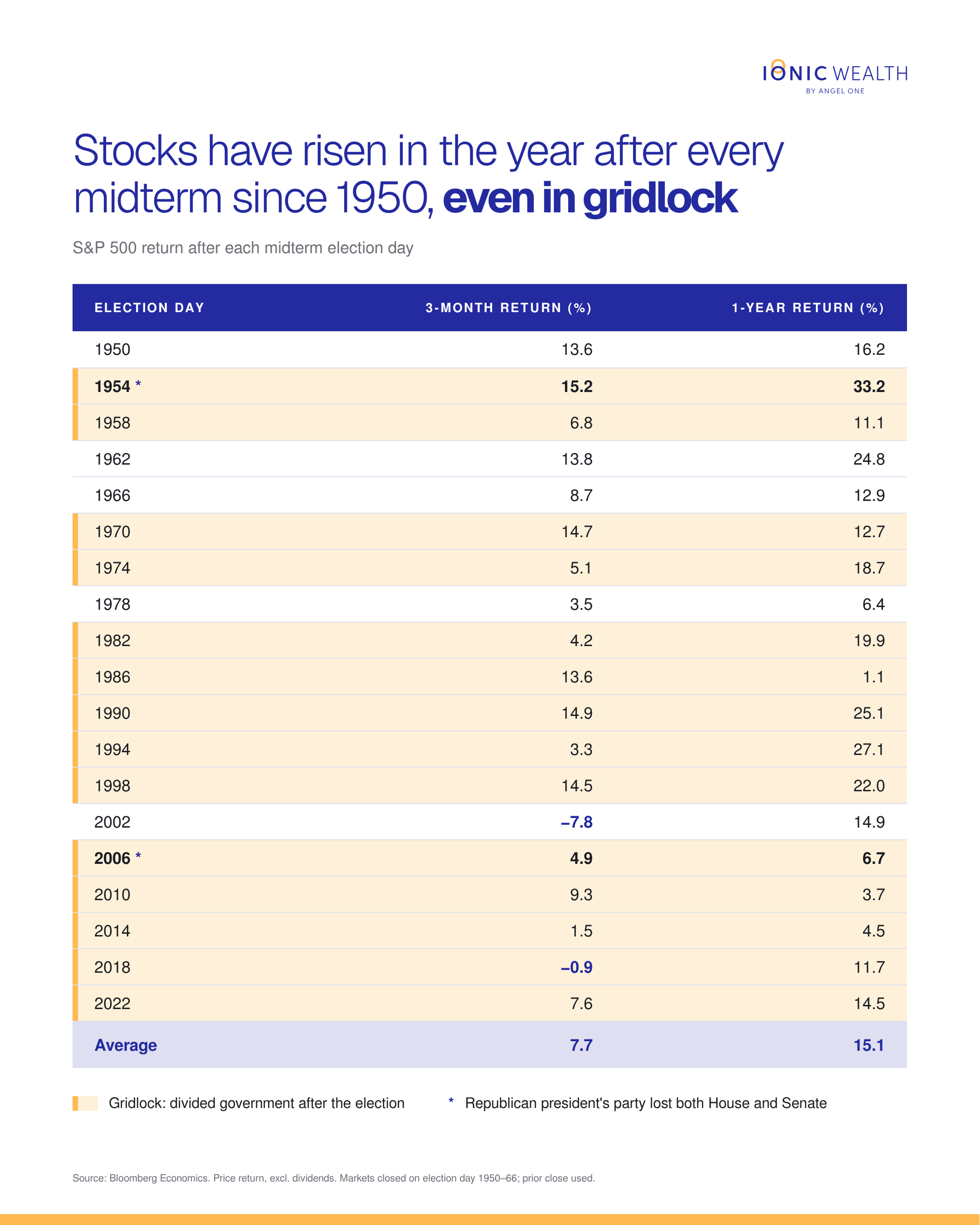
After a knee-jerk selloff, markets have fully reversed their losses, with S&P 500 and Nasdaq futures up 0.36% and 0.68% respectively. DXY has fallen 0.55% to 101.31, while the US 10Y yield has fallen ~4 bps to ~4.91%.
Source: Bloomberg, Ionic Wealth View