


Anthropic's S-1: the economics behind the growth


Updated 27 Oct 2026•3 min read

Anthropic, the maker of Claude, has filed its S-1, the document a company publishes before it lists on Nasdaq with the ticker "ANT".
The growth, and how broad it is
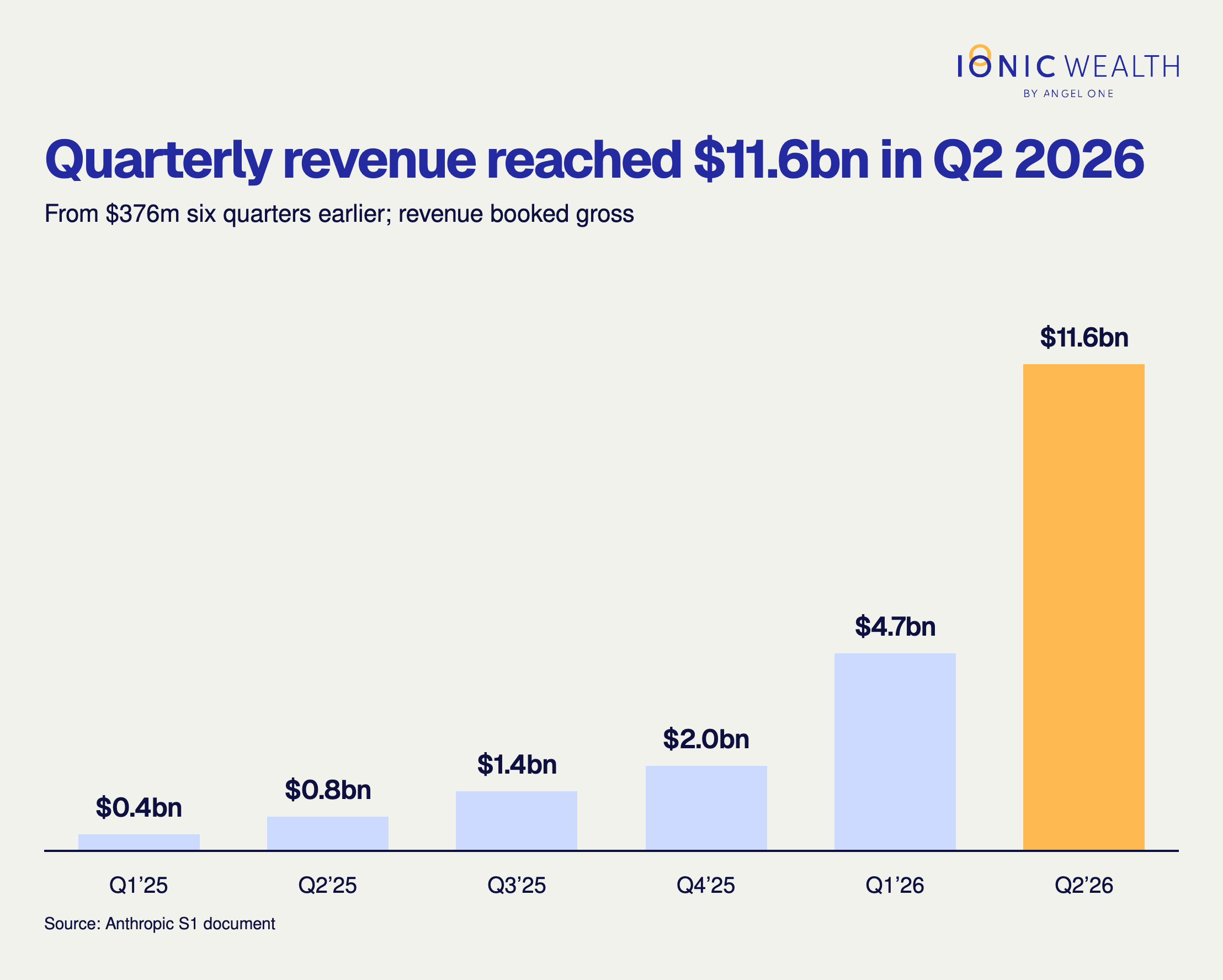
- Revenue reached $11.6bn in Q2 2026 from $376m in Q1 2025, up 1,368% y/y while compute and infrastructure costs rose about 300%.
- Q2'26 was also the first quarter when company reported operating profit at the GAAP level (GAAP operating profit, $974m, an 8% margin).
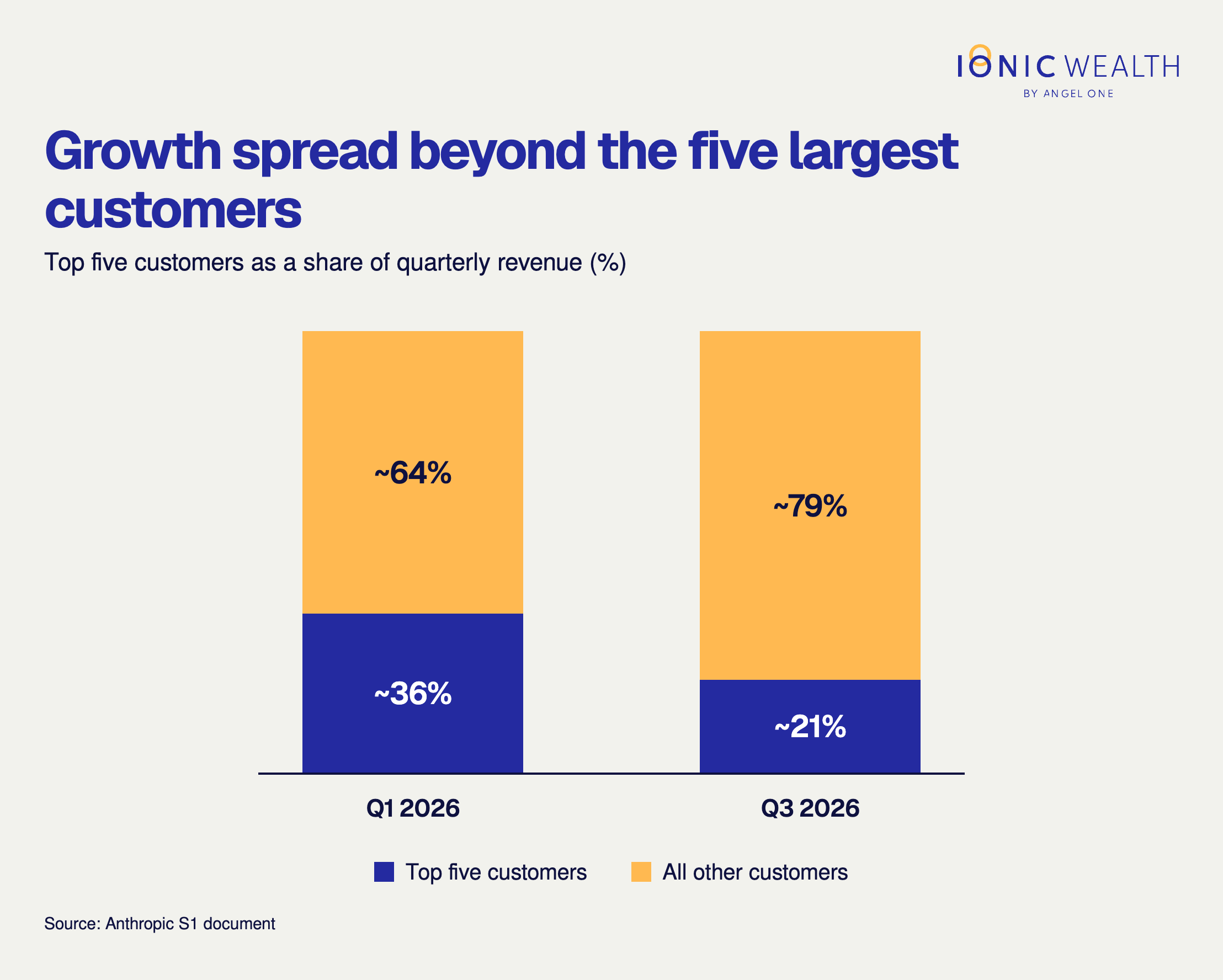
- Customer concentration is also improving as the top five customers' share of revenue has fallen from ~36% of revenue in Q1'26 to ~21% in Q3'26. Top five customers' revenue still roughly doubled, from ~$1.7B in Q1'26 to ~$3.5B in Q3'26.
- Revenue from the rest grew ~4.4x over the same two quarters, from ~$3.0B to ~$13.3B. Customers spending $100K+ a year went from ~950 to ~11,900 between Sep 2025 and Sep 2026.
- Revenue is booked gross; so on the 48% sold through cloud marketplaces (like AWS Bedrock, Google's Vertex and Microsoft's Foundry), the providers' cut is also included the top line.
High serving margins, heavy reinvestment
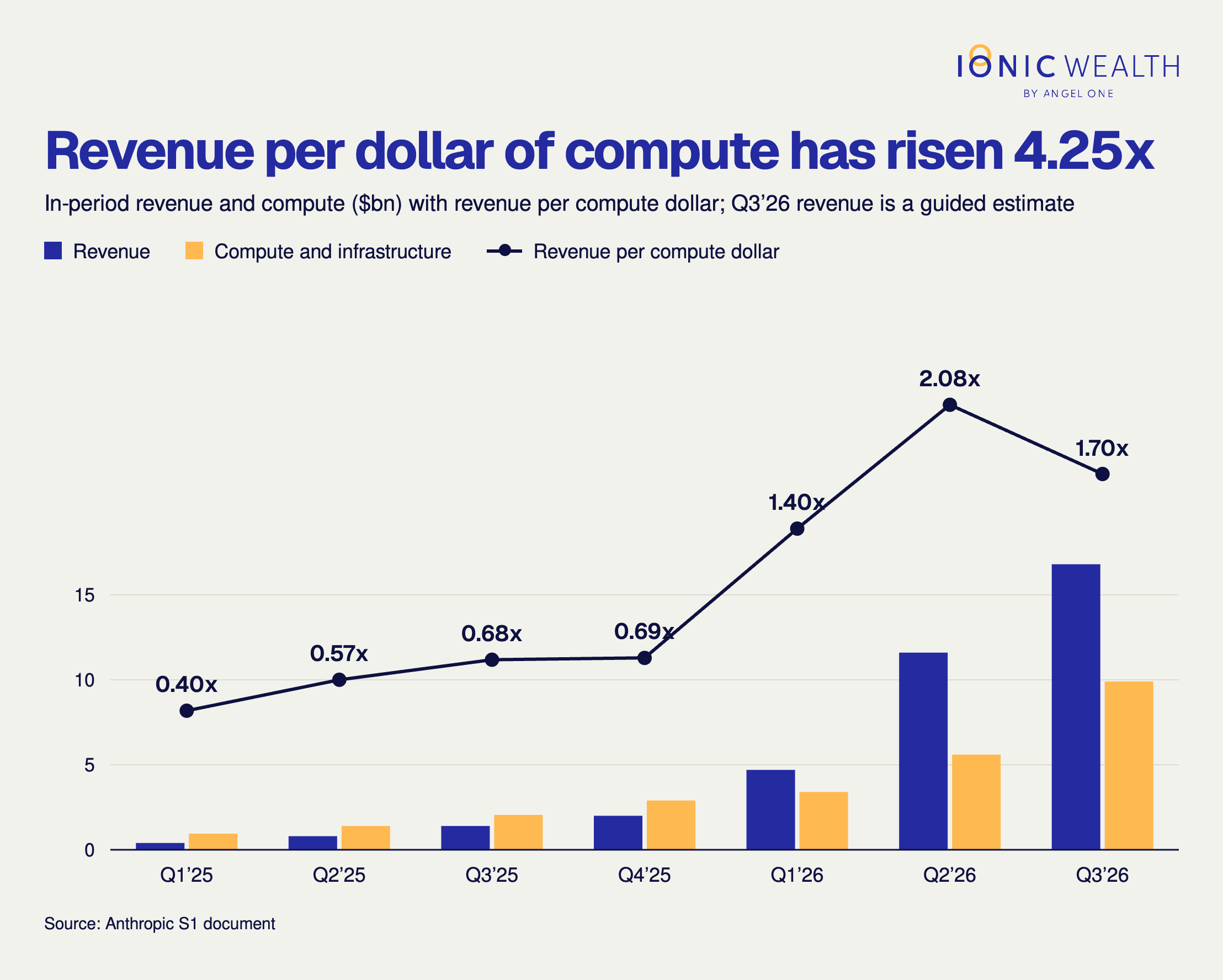
- Anthropic's compute efficiency (revenue per $ of compute costs) grew 4.25x from Q1'25 (0.40x) to Q3'26 (1.70x) - a real driver of value
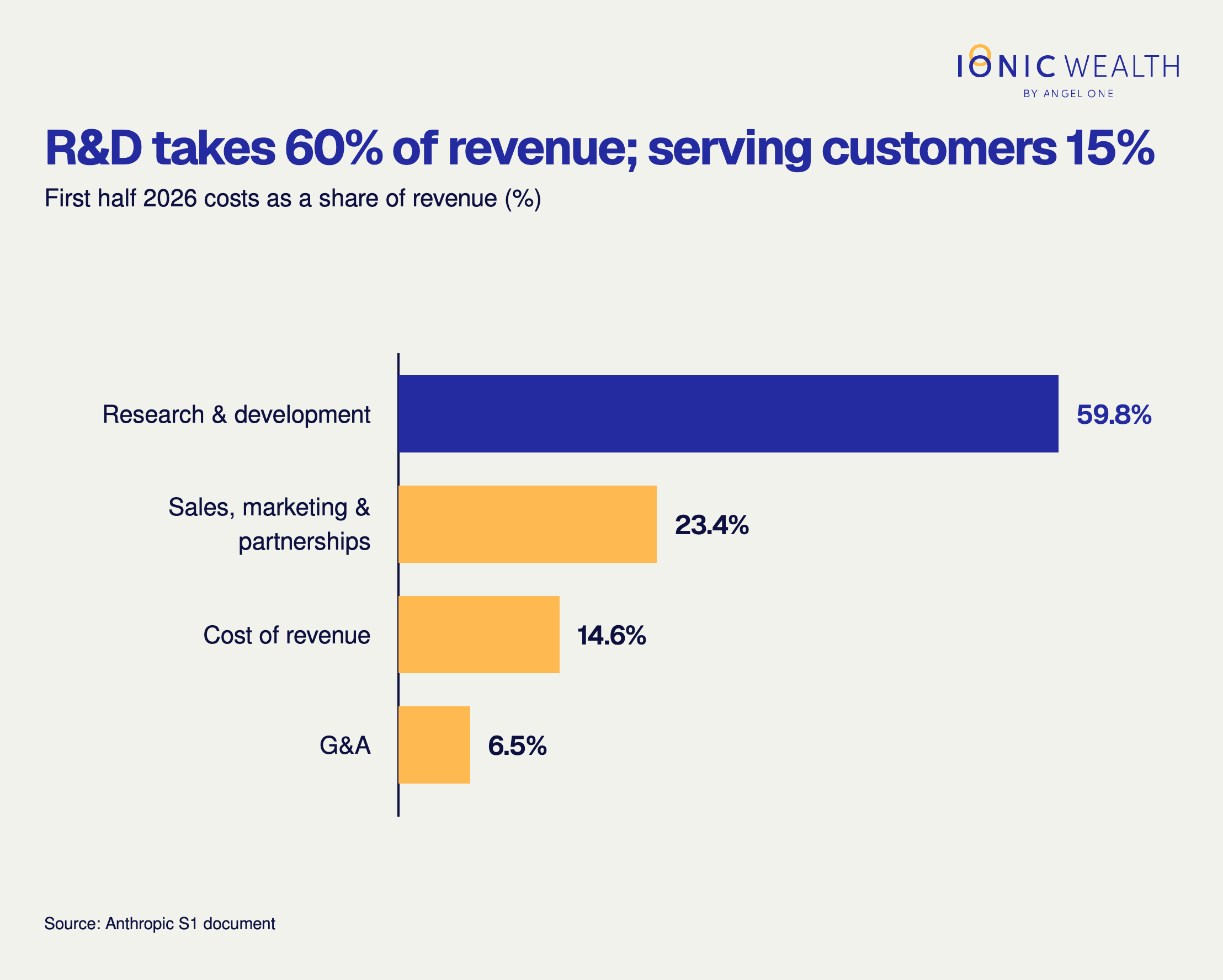
- Gross margin was about 85% in the first half of 2026, against 12% a year earlier. The cost of revenue only consists of compute and infrastructure costs associated with customer-serving workloads
- Costs of model training, and testing are primarily included in R&D costs (running c.60% of revenue)
- Anthropic is spending ~3x more in research and developments than on COGS which confirms that a lot more compute is spent on training the next models than on inference.
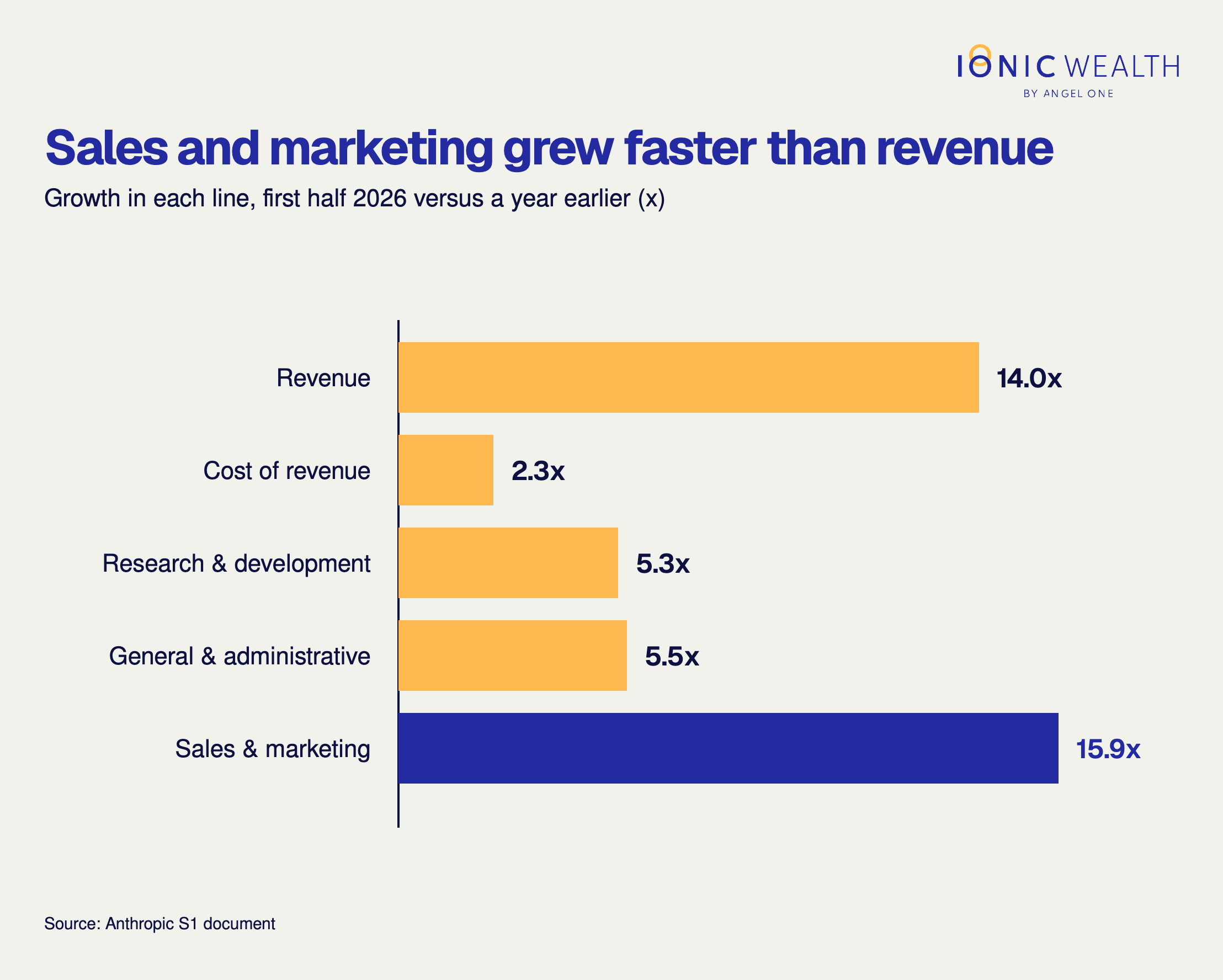
- Sales and marketing expense grew faster than revenue (15.9x against 14.0x revenue growth) in the H1, which is where costs related to running Claude models with various cloud providers show up.
A decade of fixed compute commitments
- The compute bill for Anthropic consists of commitments adding up to ~$800bn spanning over the next decade with $640bn of it being fixed or capped.
- Further, it includes $266bn of non-cancellable purchases and a further $321bn of leases signed but not yet started (both up 5-6x since the start of the year)
- The commitments are concentrated in a handful of suppliers, namely Broadcom, Google, SpaceX, and Amazon.
- Those same firms double as lenders, shareholders, sales channel and competitors. They provide $77bn (Broadcom $42bn, Google $20bn, Amazon $15bn) of partner note facilities.
The mismatch between fixed costs and variable revenue
- These costs are fixed, multi-year and take-or-pay, while revenue remains variable.
- Visibility in revenue is also correspondingly thin, as contracted backlog is only about $8.1bn against roughly $46bn of annualized revenue, and models less than six months old drove more than 80% of the latest quarter's revenue (understating the importance of strong model updates).
- The third quarter also showed that demand is elastic rather than unlimited. Growth slowed to about 45% q/q as freed capacity (from efforts to curb distillation attackers, and reported usage cut of Claude in Meta and Microsoft) was offered to existing customers at lower prices (Opus 5.5 by 20% and Haiku 5.5 by about 75%).
What it might be worth
- The filing names no IPO price.
- The last private round valued the company around $1.0tn.
- Street currently expects valuation to settle around $1.5 to $2tn.