

China Internet 3Q26: Cloud Demand Runs Into a Chip Ceiling


Updated 24 Nov 2026•5 min read

Chip curbs have made compute the scarce input
The September-quarter results from China's large internet platforms carried a single, consistent message. The appetite for AI compute is running well ahead of what these companies can physically source, and that gap has become the defining variable for the group. The latest round of US export controls, extending restrictions to remote access and tightening enforcement on overseas leasing, has in practice closed off high-end foreign silicon for Chinese buyers. Demand is not in question; the ability to serve it is. Every major platform spent the quarter racing to secure what compute it could and moving its roadmap onto domestic chips, with capital spending and compute prepayments stepping up sharply and cash flow turning negative at several names. For a growth story, guidance framed around chip availability rather than customer interest is an unusual place to sit.
Two speeds inside every business
Running alongside the AI build is a soft consumer economy. With retail spending slowing and online goods sales falling, the commerce and advertising engines funding AI investments are themselves under pressure. That has opened a widening divide inside each company, with cloud and AI revenue compounding at rates rarely seen while the core franchises grow slowly or shrink. The market's now trying to weigh an exceptionally strong demand signal against a real supply constraint, and the names that control their own silicon are the ones that will set the pace.
Alibaba: the cleanest cloud story, now gated by its own chips
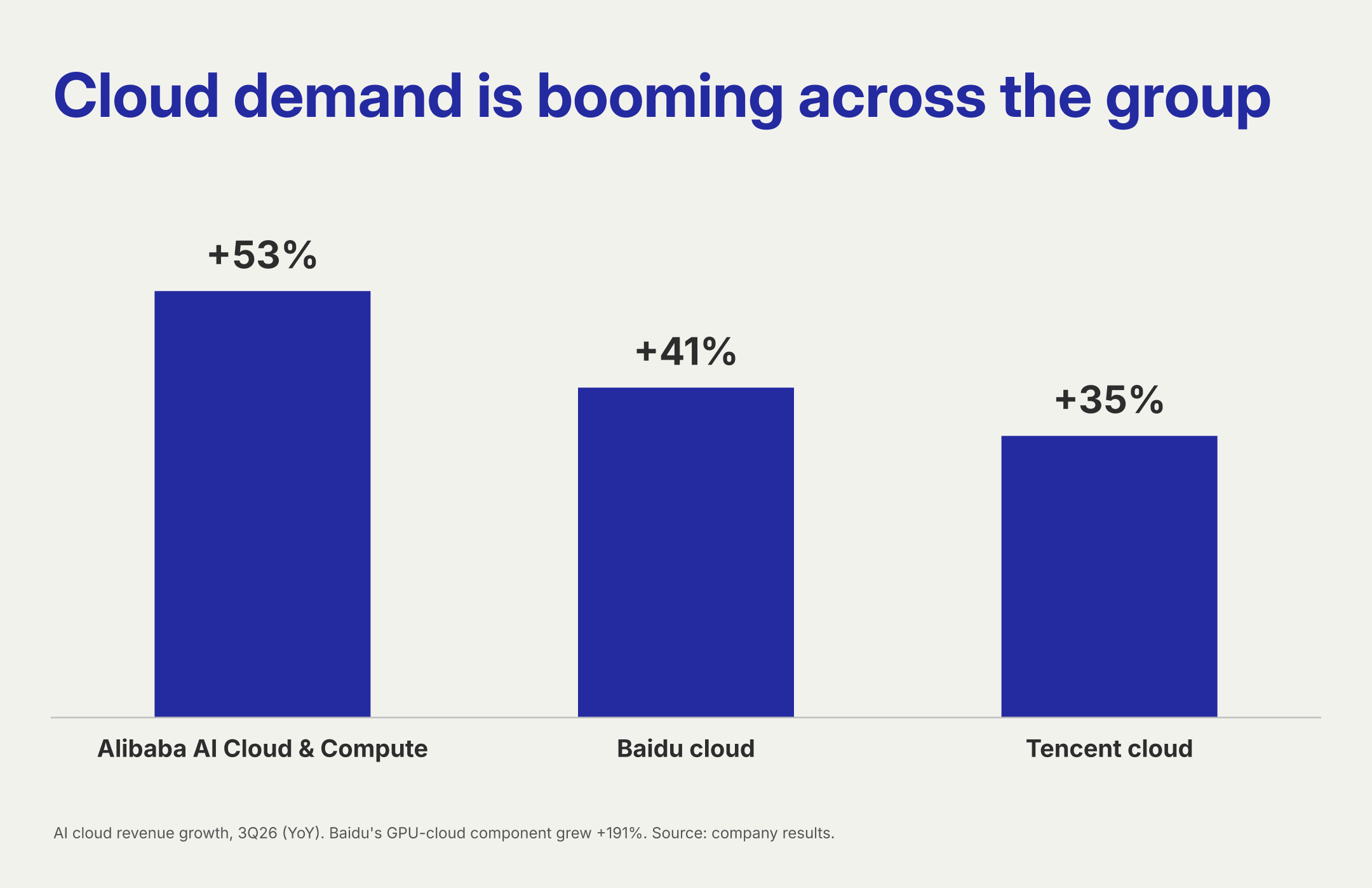
Alibaba has spent two years rebuilding around cloud and AI, and this quarter it had the clearest version of that story in the sector. Cloud growth accelerated again, external demand grew faster, and AI-related products now make up close to a third of cloud sales. The business is increasingly running on Alibaba's own T-Head silicon, which is beginning to show up as a revenue line and to sidestep the foreign-chip bottleneck.
The notable development this quarter was management cutting next year's cloud growth guidance, not because demand is cooling but because access to foreign compute has been curtailed and domestic supply needs time to scale. In other words, the only thing capping an otherwise accelerating business is how fast it can get chips. The reacceleration that follows hinges on T-Head reaching mass production, and the longer-term cloud ambitions were left firmly in place. The consumer side is steadying rather than recovering, with instant-commerce losses narrowing enough to support group profit, but the case here is now unambiguously a cloud-and-chips one.
Tencent: a resilient core, with the AI bill now showing
Tencent came into the quarter with the most durable core in the group, led by games and a strong advertising engine, with cloud accelerating on AI demand. The franchise is doing its job, and advertising in particular is benefiting from AI-driven targeting. The change this quarter is what the AI build now costs.
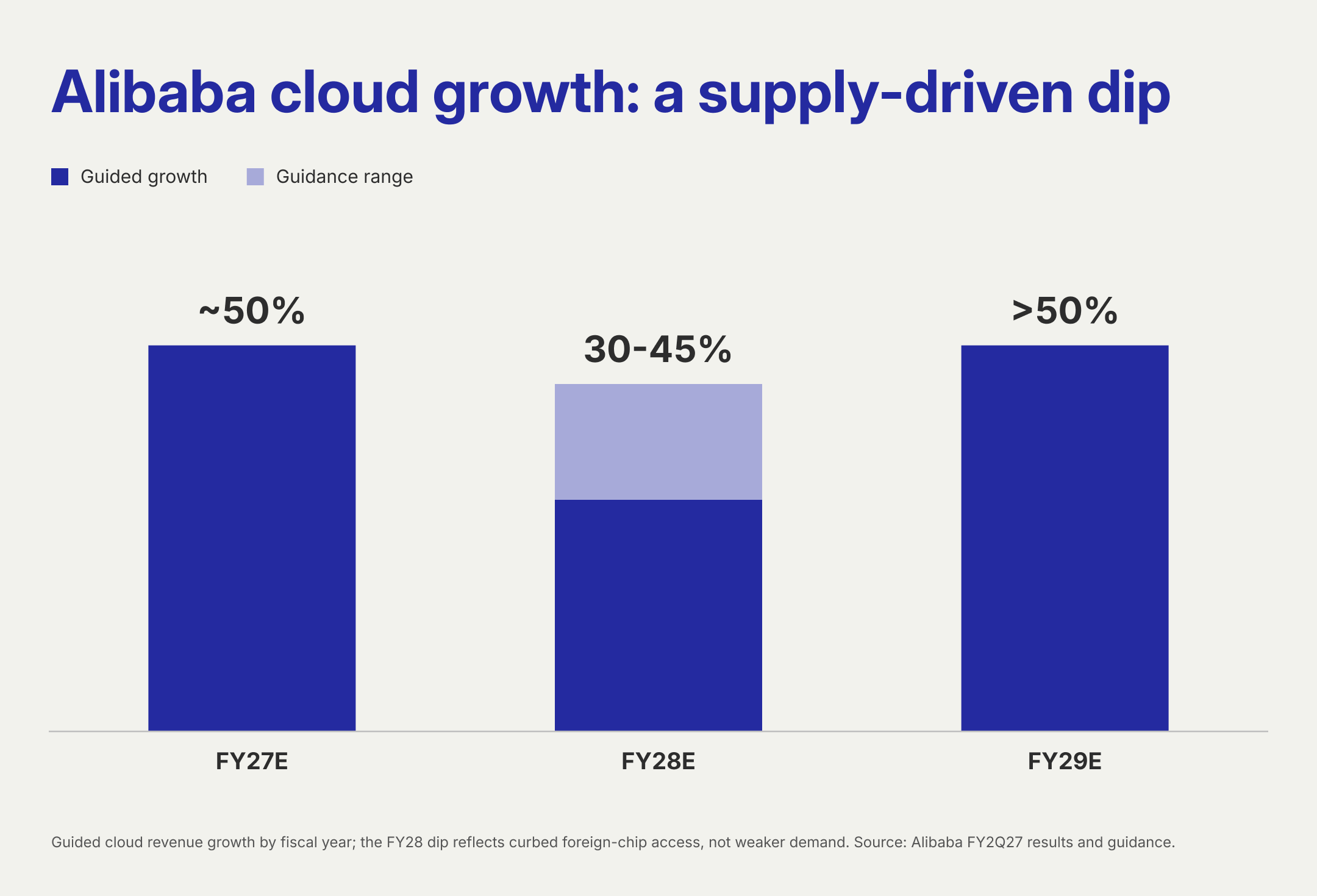
For the first time in years, that cost is visible at the bottom line, as the drag from new AI products outweighed growth in the base business and tipped profit lower. The spending behind it is heavy enough, between capital expenditure and prepayments to lock in future compute, to push the group into a rare net-debt position. With foreign GPUs restricted, incremental investment is tilting towards domestic chips and supporting hardware. Management signalled that the prepayment surge has peaked, which should steady cash flow from here, so the debate moves from how much Tencent is spending to how quickly that spend, including its new Weixin assistant, converts into revenue.
Baidu: the purest transition, and the most exposed to the squeeze
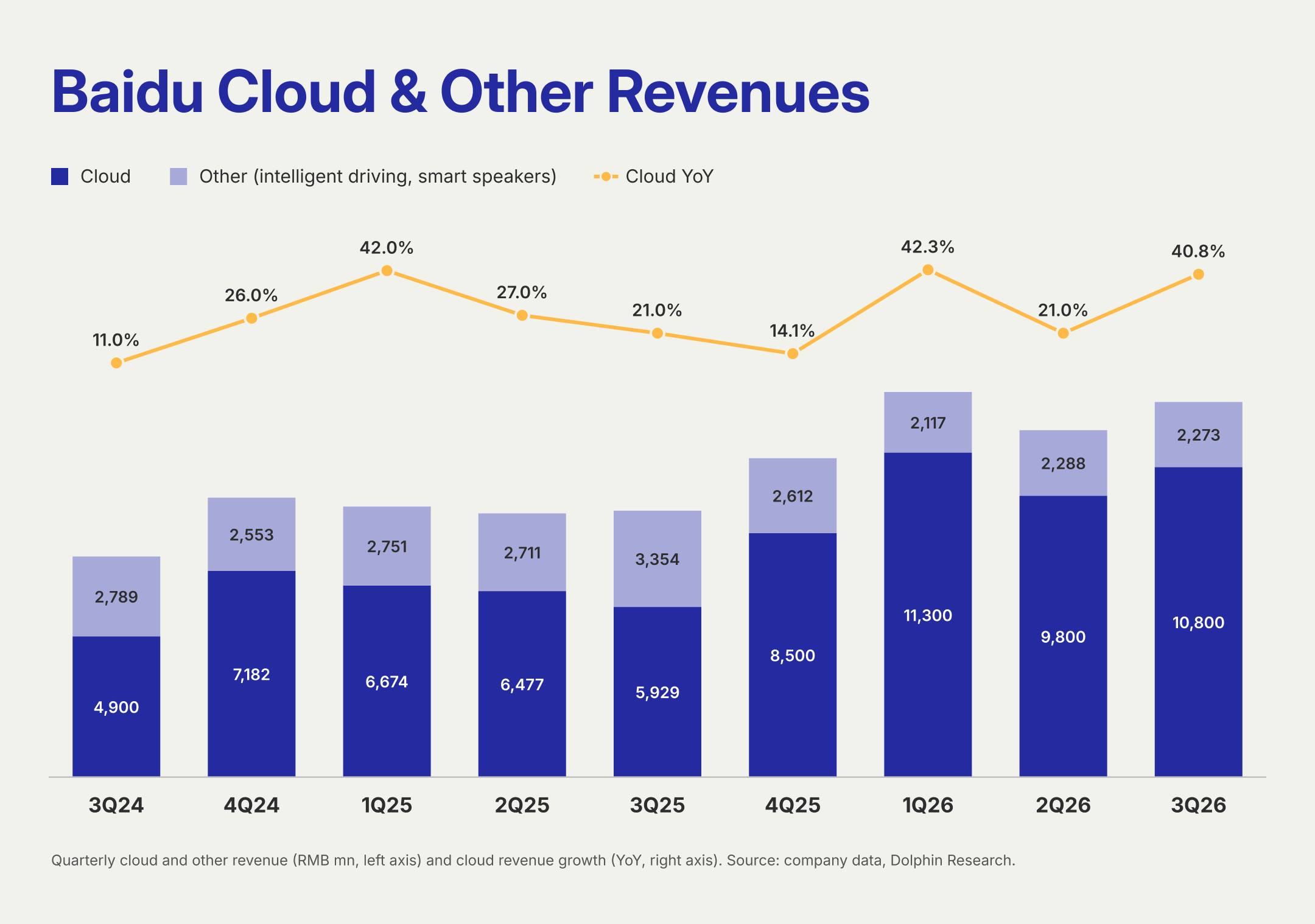
Baidu is the sharpest expression of the sector's shift from an old business to a new one. Its legacy search franchise has been fading for some time, and the company has pinned its future on cloud, AI and its own chips.
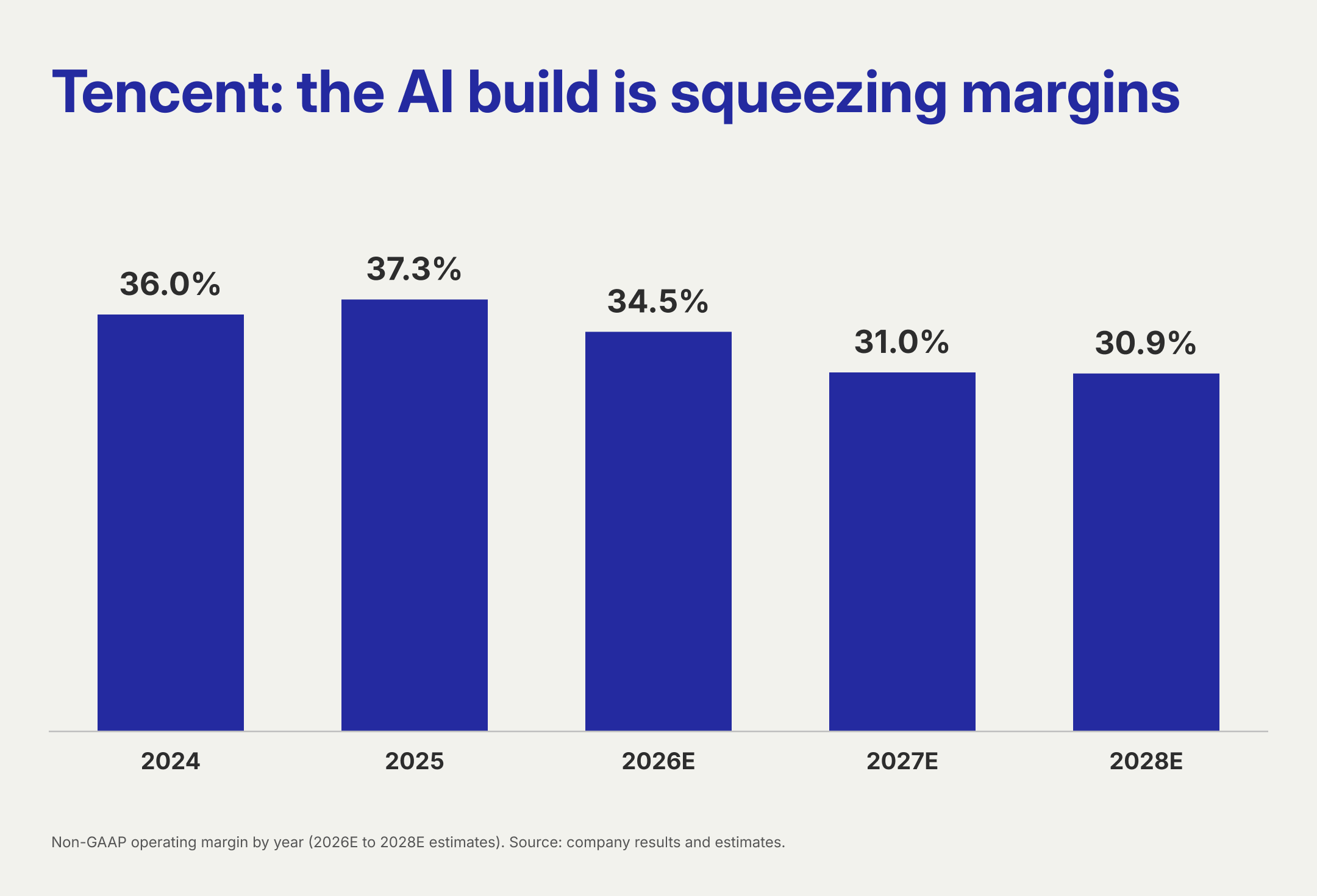
That transition is now moving at full speed in both directions. The AI cloud business is growing strongly, led by GPU demand and a surge in external model usage on its platform, and AI-powered activities now make up more than half of Baidu's core revenue, while search continues to fall away with no floor yet in sight. The mix shift is compressing margins and earnings, so the case has narrowed to timing: the assets are compounding, but the real payoff arrives in 2028, with this year the investment trough. The swing factor is Kunlunxin, Baidu's in-house accelerator, positioned to benefit most directly from the shortage of high-end compute as its next chip reaches volume production.
Shifting to the consumer side: JD and food delivery
Away from the cloud and compute story sits the Chinese consumer, where the defining battle of the past year has been instant retail and food delivery. JD, Meituan and Alibaba have all poured subsidies into on-demand delivery to buy share, spending that ran well ahead of revenue and dragged losses across every player involved. That war has started to cool, helped in part by regulators, who have leaned on the platforms to rein in irrational subsidies and have tightened scrutiny of the sector more broadly, from merchant vetting to the fines handed out for lax oversight. A more disciplined competitive backdrop changes the economics for everyone fighting in delivery.
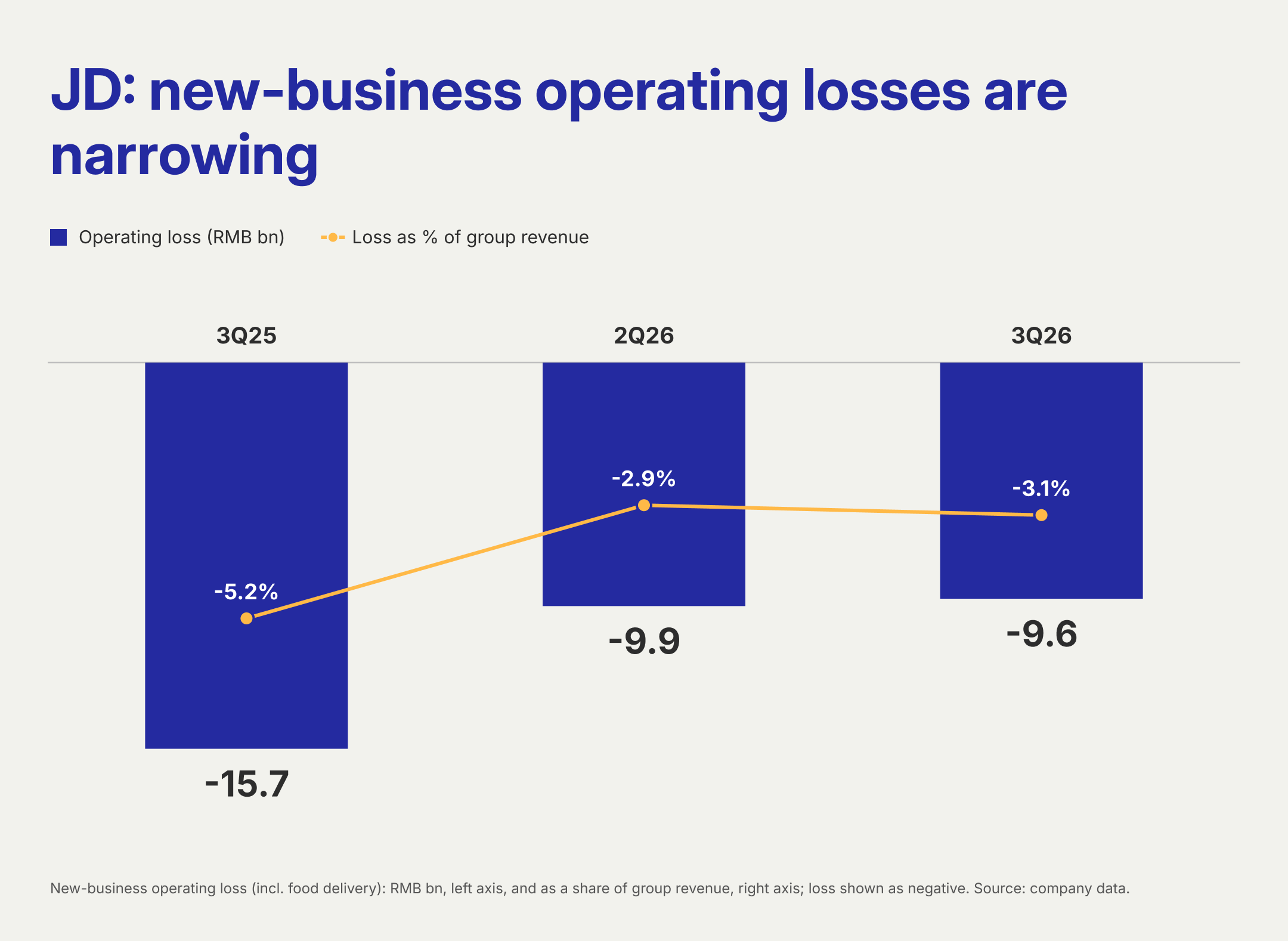
For JD, the business beneath that fight is its core first-party retail franchise, now leaning harder on higher-margin advertising and marketplace income. Revenue returned to growth, retail margins reached a record, and group profit rose strongly, while new-business losses narrowed sharply over the year, with food-delivery losses more than halving as subsidies were pulled back. The pace of improvement is slowing, but the earnings path into 2027 looks cleaner, resting on tighter discipline rather than top-line acceleration. The point still open is whether the cash this generates is returned to shareholders or kept in financial investments, as it has been of late.