
Cues in the News: US Fed Rate Decision: Rate Unchanged, War Uncertainty Linger
 AI Summary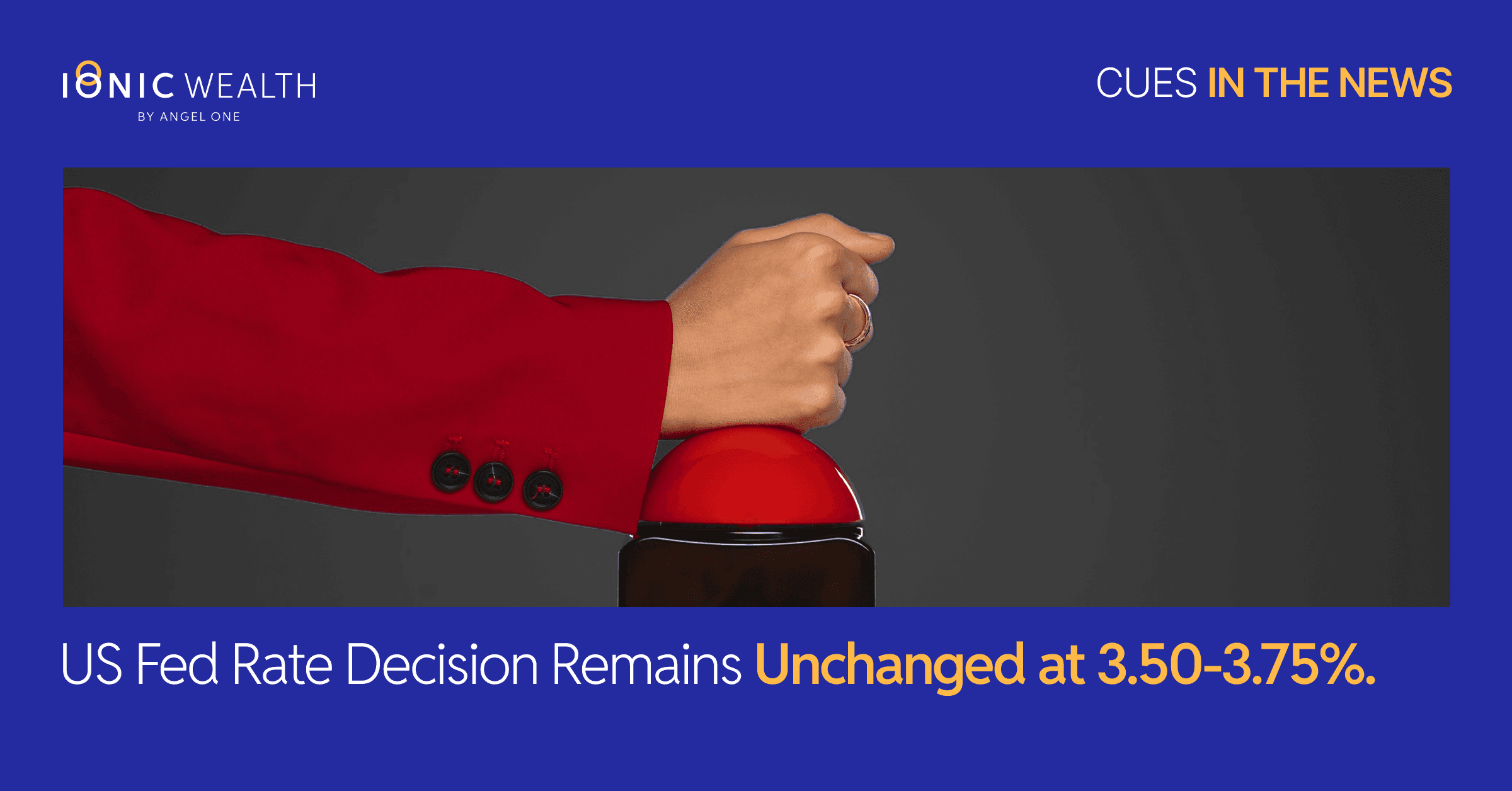
In a much-anticipated move, the FOMC voted with 11:1 majority to keep the federal fund rate unchanged at 3.50-3.75%. Uncertainty around the economic outlook remains elevated, with the ongoing situation in the Middle East adding a significant unknown to the prospects for the US economy. While inflation has stabilized around 2.4% over the past two months, rising fuel prices, driven by ongoing Middle East tensions, pose an upside risk in the near term.
Growth Parameters Remain Solid, Job Gains Remain Low Partially Due To Lower Immigration
Overall economic growth remains resilient supported by strong consumer spending and business investment, though housing sector continues to be under stress.
In the recent months, unemployment rate has been broadly stable, with marginal uptick in recent 12 month average to 4.3% from 4.1%. Additionally, new payrolls continue to be low. While part of slower job creation could be explained by decline in the labour force amid lower immigration and labour force participation, the demand for labour has also softened.
Inflation Expectations Rise Amid Higher Oil Prices
US inflation remains above the 2% target, driven by tariff-led goods inflation, even as services disinflation persists. Near-term expectations have risen, reflecting the impact of higher oil prices.
Growth & Inflation Seen Slightly Higher in 2026
Fed Still Signals One Rate Cut Each In 2026 & 2027. For 2026, growth is expected to be around 2.4%, marginally higher than 2.3% estimated in December 2025 policy, although unemployment rate is maintained at 4.4% for the year. On the other hand, inflation expectation has risen to 2.7% from 2.4% for 2026.
Although, the fed maintained its expectation for one rate cut in 2026, the evolving situation in the middle east remains highly uncertain with sharp swings witnessed in the oil prices. If oil prices remain consistently elevated, it could potentially delay rate cut in the near-term.
Markets Under Pressure As Oil Prices Surge
The S&P 500 declined 1.4% from the previous close, as Brent crude surged to USD 110/bbl. Short-term yields moved higher in response to elevated wholesale inflation, adding uncertainty to the rate trajectory. Meanwhile, the DXY strengthened, closing above the 100 level for the second consecutive session.
Ionic Wealth View
Fed has decided to be in wait and watch mode, given the war related uncertainty. Fed’s inflation expectations are now dependent on fading tariff inflation and clarity around the Iran war and consequent energy prices. Fed has rightly chosen to be on a likely extended pause given the uncertainty. The “mildly restrictive” stance seems to be appropriate for now. The dot plot showed no change with one cut each getting signaled in 2026 and 2027. The pause restricts weaker dollar and therefore hurts the EM trade which will see perils of both higher energy prices and weaker currency. RBI is also likely to face similar dilemma and is now unlikely to cut in April.
This view is for educational and informational purposes only and should not be construed as an investment advice.
Enjoying this article
Share it with the world!
WHAT'S
NEW
Collection of latest reads for you

US Delivers Expected Rate Hike, Reaffirms Focus on Price Sta...
Ionic Wealth Macro Desk on 17 Sept 2026
The Fed raised rates 25 bps to 3.75–4.00% in a unanimous vote, with the dot plot pointing to one more hike in 2026. Growth and jobs stay resilient, but inflation above 3% now isn't seen h...

Macro Headwinds Weigh On Market Sentiment, US Fed Decision I...
Ionic Wealth Macro Desk on 16 Sept 2026
Oil above $100/bbl. US 10Y past 5%. DMs down 1.7%, EMs down 3.4%. INR slips despite RBI support. All eyes now on the Fed's 16th September call — Ionic Wealth holds its 70:20:10 allocation...

What goes inside a AI data center?
Ionic Global Research on 15 Sept 2026
AI is transforming data centres from traditional computing facilities into massive, power-intensive infrastructure. This edition explores the rise of AI data centres, their shift from meg...
Ionic Wealth Newsletter
Investment insights
made simple
Sign up for our newsletter about wealth, markets, and more.




AMFI Registered Mutual Fund Distributor
Angel One Wealth Limited (AOWL)
CIN AOWL - U66190MH2023PLC411784
Angel One Investment Services Private Limited (AOISPL)
ARN AOISPL - 306165
CIN AOISPL - U66190MH2024PTC426203
SEBI Registered Research Analyst Number- INH000020305
Mutual fund investments are subject to market risks, read all scheme related documents carefully.
Registered Office: 601, 6th Floor, Ackruti Star, Central Road, MIDC, Chakala, Andheri (East), Mumbai - 400 093
Copyright © 2025, Ionic Wealth | All rights reserved