
A Second Source: Google Turns to Samsung for Its AI Chips
 AI Summary
A Second Source: Google Turns to Samsung for Its AI Chips. TSMC is maxed out. Big Tech wants a backup.
Google is breaking its all-Taiwan habit. Google designs its own AI chips — called TPUs — to lean less on Nvidia, and Taiwan's TSMC has always built everyone of them. This week, reports said Google is in talks to have Samsung manufacture part of its next-generation TPU (codenamed "Icefish") on Samsung's advanced 2-nanometre process — a notable break from its TSMC-only past.
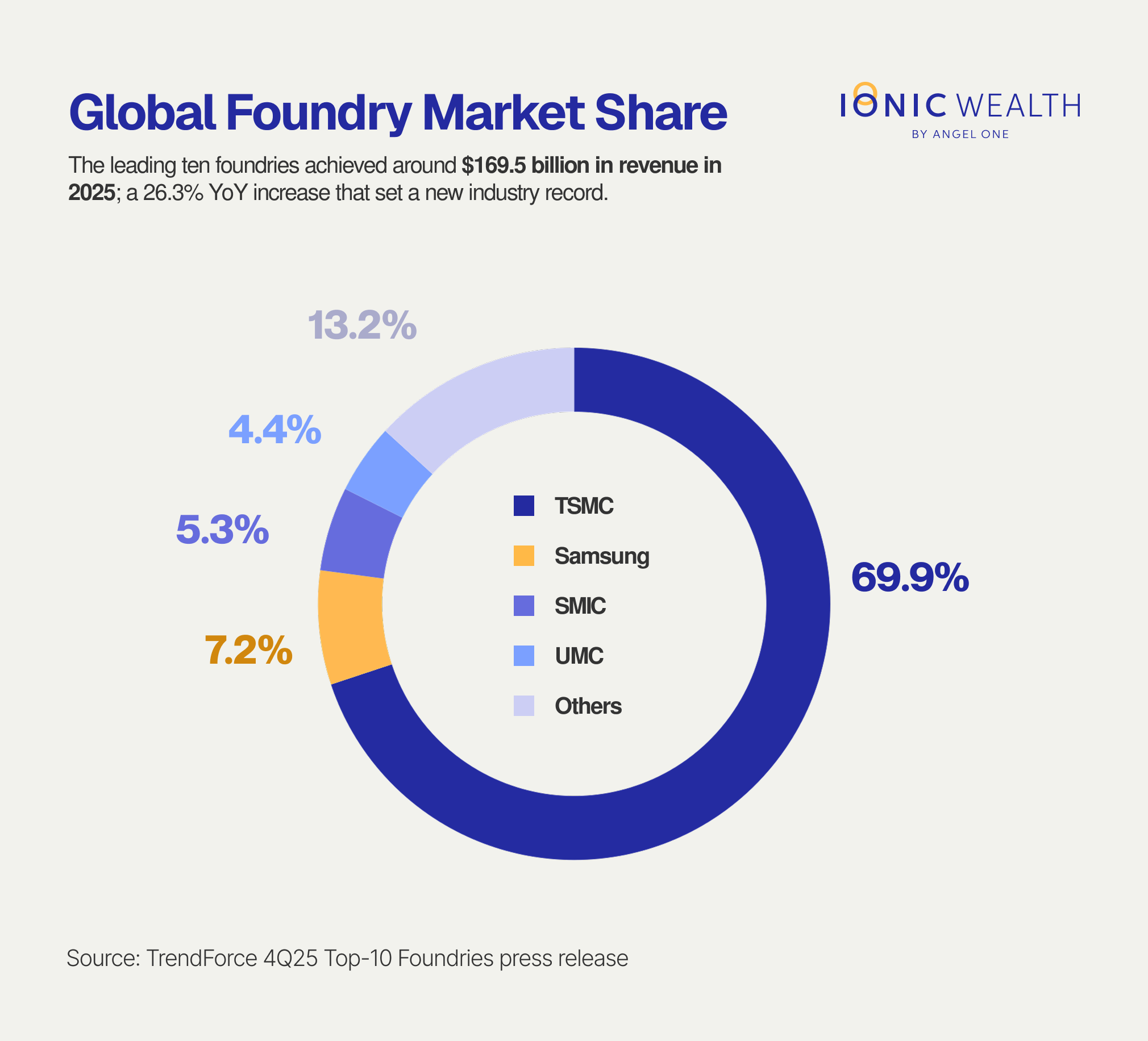
Why now: TSMC is simply maxed out. The trigger is scarcity. TSMC's chairman publicly acknowledged on June 9 that customer demand is so high there are limits to handling it. So, Google is splitting the job: TSMC would make the main compute "brain" on its most advanced process, while Samsung would make a supporting piece — the part that links the chip to its memory.
It signals the chip making race is opening up. For years, TSMC has been almost the only option for cutting-edge chips. This is a sign Big Tech wants a second supplier — and a potential turning point for Samsung's long-struggling factory arm, which has recently also won orders from Tesla and Nvidia, pitching a one-stop package of chips, memory and packaging. Samsung already supplies more than 60% of the fast memory used in Google's current TPUs.
Why it matters for investors. A more competitive chip making market is healthy: it eases the AI bottleneck and creates a credible second source. It's also a reminder that the AI build-out lifts more than one boat — even with TSMC still dominant, rivals can win meaningful work. The caveat: this is still early — talks rather than a signed deal, with mass production not targeted until around 2028.
Ionic View
The wider story is that the AI chip supply chain is slowly broadening. TSMC remains the clear leader by a wide margin, but its capacity limits are pushing the biggest tech firms to cultivate a credible second source — and Samsung, after years of trailing, is rebuilding its standing with work from Google, Tesla and Nvidia. The direction of travel matters more than any single contract: a more contested chip making market spreads the AI-hardware opportunity a cross more players and lowers the industry's reliance on one supplier. We see that broadening as the real signal here.
Enjoying this article
Share it with the world!
WHAT'S
NEW
Collection of latest reads for you

US Delivers Expected Rate Hike, Reaffirms Focus on Price Sta...
Ionic Wealth Macro Desk on 17 Sept 2026
The Fed raised rates 25 bps to 3.75–4.00% in a unanimous vote, with the dot plot pointing to one more hike in 2026. Growth and jobs stay resilient, but inflation above 3% now isn't seen h...

Macro Headwinds Weigh On Market Sentiment, US Fed Decision I...
Ionic Wealth Macro Desk on 16 Sept 2026
Oil above $100/bbl. US 10Y past 5%. DMs down 1.7%, EMs down 3.4%. INR slips despite RBI support. All eyes now on the Fed's 16th September call — Ionic Wealth holds its 70:20:10 allocation...

What goes inside a AI data center?
Ionic Global Research on 15 Sept 2026
AI is transforming data centres from traditional computing facilities into massive, power-intensive infrastructure. This edition explores the rise of AI data centres, their shift from meg...
Ionic Wealth Newsletter
Investment insights
made simple
Sign up for our newsletter about wealth, markets, and more.




AMFI Registered Mutual Fund Distributor
Angel One Wealth Limited (AOWL)
CIN AOWL - U66190MH2023PLC411784
Angel One Investment Services Private Limited (AOISPL)
ARN AOISPL - 306165
CIN AOISPL - U66190MH2024PTC426203
SEBI Registered Research Analyst Number- INH000020305
Mutual fund investments are subject to market risks, read all scheme related documents carefully.
Registered Office: 601, 6th Floor, Ackruti Star, Central Road, MIDC, Chakala, Andheri (East), Mumbai - 400 093
Copyright © 2025, Ionic Wealth | All rights reserved