
Cloud Just Made the AI Spending Argument Easier
 AI Summary
The question hanging over the rising capex finally got a direct answer. For months investors have been fretting over how Big Tech will make a return on its AI spending, and cash outflows have been punished. Reporting within a day of each other in late July, Microsoft and Amazon both put ROI at the centre of their calls. Andy Jassy set out the detail and timing of how a data centre is built and monetized: less than three years on average to break even on computing equipment, against AI customer contracts of at least five years, which leaves a lot of juice for Amazon to squeeze. He went as far as suggesting AWS could eventually become a $1 trillion annual revenue business.
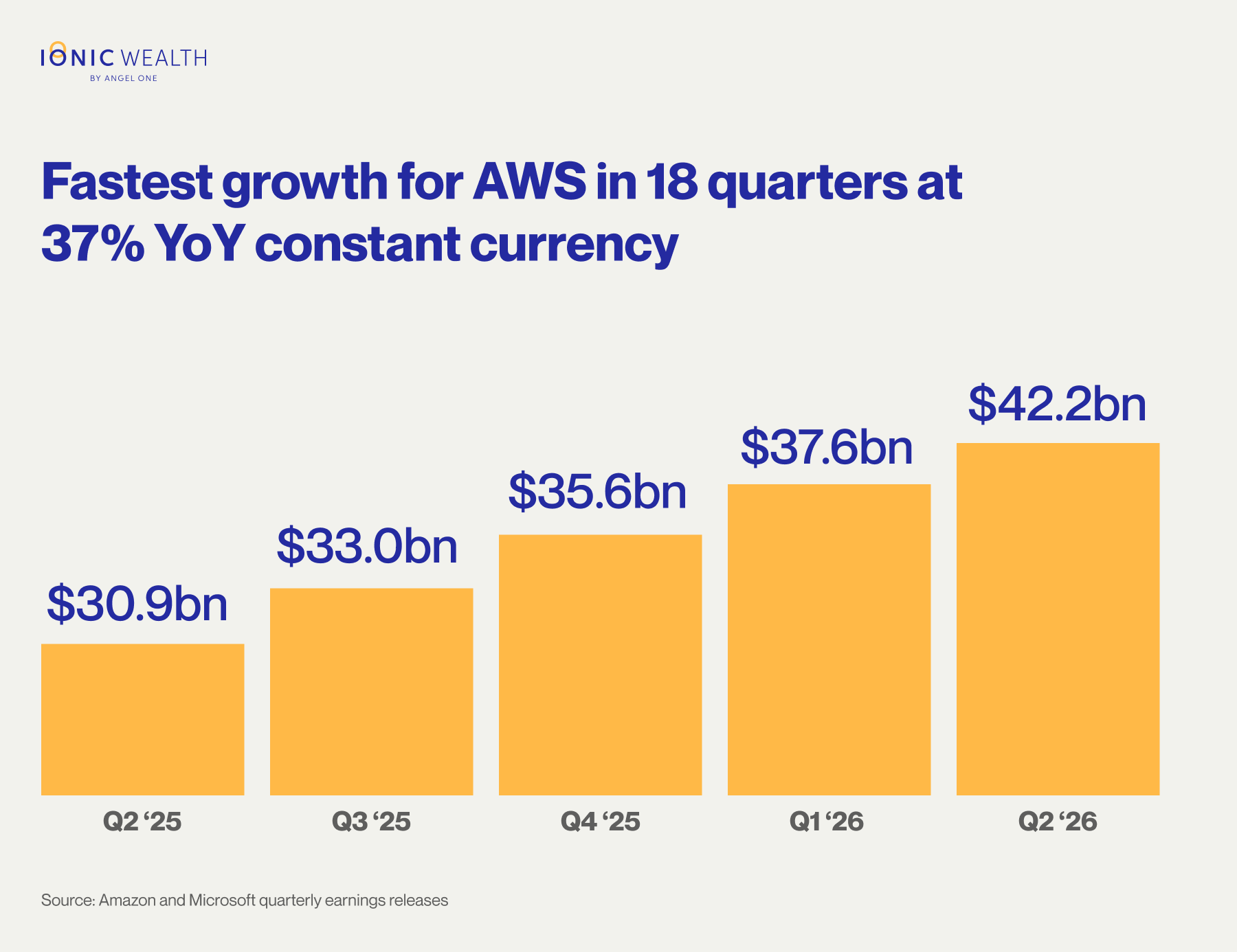
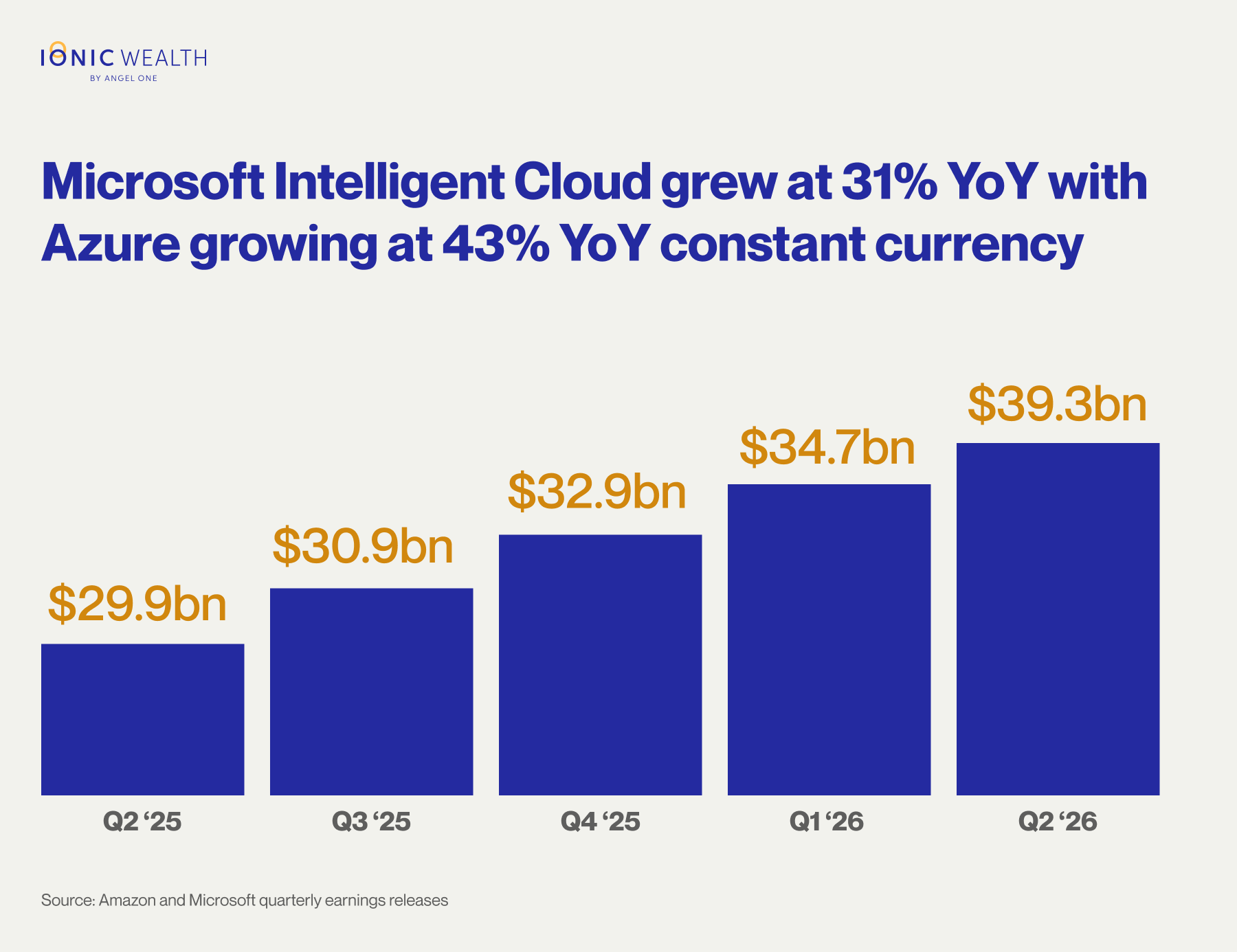
Margins expanded and the order books grew alongside the growth. Azure grew 43%, with guidance pointing higher again next quarter. AWS grew 37%, its fastest in eighteen quarters, and its operating profit rose 64%, lifting its margin to 39% from around 33% a year earlier. Behind both sits a large book of contracted work not yet delivered: $678 billion at Microsoft and $496 billion at AWS.
AI demand is running ahead of what the providers can build. AI is perhaps the most important driver of cloud growth, because companies and AI developers want more computing power and it is easiest and often fastest to rent it, with customers clamoring for access to such an extent that the ability to supply it is more of a limitation than demand. But a shift predating the AI boom has also quietly persisted: companies keep moving computing work to the cloud and using less of their own equipment.
Microsoft extended the assumed life of its data centers from fifteen years to twenty-five. One of the strongest arguments against this spending has been that hyperscalers are committing enormous sums to infrastructure that could depreciate economically faster than expected if hardware cycles shorten or demand shifts. Microsoft is making the opposite case: the buildings will earn revenue over a longer period than the market assumes, while the expensive short-lived assets inside them, mainly the chips, can be adjusted more quickly if demand changes.
Ionic View
Cloud computing increasingly looks like the answer to the question that has hung over this spending. Unlike the other avenues companies have proposed for reaping returns from AI investment, from chatbot advertising to subscriptions for access to models, cloud's financial model is relatively well understood: buy or lease the buildings and gear, rent it out, recoup what was spent over a few years. It is capital intensive but can be highly profitable, and this quarter the margins showed it. Neither company has eased off the spending, with Amazon lifting its 2026 capex to $220 billion from $200 billion and Microsoft guiding higher again. But neither is asking investors to wait for AI returns anymore either, and faster cloud growth reduces the risk of capital spending outpacing the returns it is meant to earn.
Enjoying this article
Share it with the world!
WHAT'S
NEW
Collection of latest reads for you

Role of GPUs in the data center buildout
Ionic Global Research on 22 Sept 2026
The AI boom is driving unprecedented demand for GPUs, putting chipmakers and data-center infrastructure at the centre of a rapidly evolving market. This edition of TTT explores the forces...

BOJ Raises Rates To 1.25%, Further Hikes Face A More Divided...
Ionic Wealth Macro Desk on 18 Sept 2026
BOJ raised rates 25bps to 1.25% (7-2 vote), the highest level since 1995, as yen weakness and sticky inflation near 2% persisted. The US-Japan yield gap continues pressuring JPY despite r...

US Delivers Expected Rate Hike, Reaffirms Focus on Price Sta...
Ionic Wealth Macro Desk on 17 Sept 2026
The Fed raised rates 25 bps to 3.75–4.00% in a unanimous vote, with the dot plot pointing to one more hike in 2026. Growth and jobs stay resilient, but inflation above 3% now isn't seen h...
Ionic Wealth Newsletter
Investment insights
made simple
Sign up for our newsletter about wealth, markets, and more.


Experience Ionic Wealth AI
and much more on the app



Disclaimer: Mutual fund investments are subject to market risks, read all scheme related documents carefully.
Co - founder
in your journey of wealth creation.