
SaaS vs AI – Contextualizing the debate
 AI Summary
AI vs SaaS: Rebuilding Amidst Disruption. The seat-based model is under siege. The data moat isn't.
Why have SaaS names been under pressure? – (i) Anthropic’s launch of Claude Cowork (desktop agent for non-technical users) ranks among the more defining triggers of the ongoing SaaS/broader software meltdown - with LLMs increasingly moving upstream (being integrated into applications as opposed to just doing knowledge-assistant based work), investors are beginning to question whether existing application software based names, particularly those focused on CRM, human capital management, supply chain etc, still enjoy any structural advantages
(ii) If AI is indeed augmenting productivity of the workforce while helping companies optimize on OpEx (by needing to hire less employees), then this puts the seat-based model, where vendors sell licenses on a per employee basis, under jeopardy. This has been a key driver for software multiple compression as seen in figure 1. Alternatively, semis are seen as less-disruptable facilitators of AI sparking rotation of capital outside of software into semis (see figure 2)
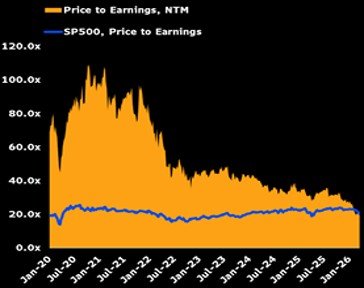
Figure 1: Software vs S&P 500 1yr fwd PE multiple
Can this software stack be replaced overnight? – (i) Not if the vendor is a system of record – having access to trillions of datapoints related to customer transactions, behavior, order history etc helps provide a solid foundation on top of which AI agents/chatbots can be built.
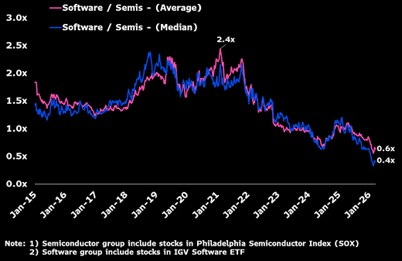
Figure 2: Software vs semis 1yr fwd EV/sales multiple
(ii) AI is a force multiplier and not a disruptor for the likes of infrastructure software – In pockets such as electronic design automation (software used to design and simulate semiconductor), AI-led parallel computing helps simulate a greater number of design configurations, thereby enhancing the software’s value, as opposed to diminishing it. Models like these are more outcome oriented as opposed to headcount oriented.
Ionic View
AI-led disruption concerns have resulted in earnings multiples getting compressed across almost the entirety of the software landscape with every new model/product announcement from Anthropic serving as yet another death knell. However, we believe this broad beatdown presents asymmetric value creation opportunities –
(i) while from a tech stack perspective, it could seem easy to vibe-code a CRM-based or human capital management software, trust as well as the structural advantages of controlling and harmonizing the underlying database still presents value creation opportunities;
(ii) cybersecurity software names, particularly those focused on data security, identity recognition and agentic AI governance will become all the more relevant as the internet struggles to differentiate man from machine;
(iii) as flagged above, infrastructure software should see an uptick in number of design workflows supported as AI becomes an increasingly important part of the tech stack
Enjoying this article
Share it with the world!
WHAT'S
NEW
Collection of latest reads for you

Semis: 9 turns of de-rating, c.20 points of EPS accretion
Ionic Global Research on 8 Sept 2026
Semiconductor stocks just went through their sharpest valuation reset of the year, the SOXX index's forward P/E fell from roughly 29x in late June to 19.6x now, even as forward earnings e...

Asset X | September 2026: Key Signals Across Asset Classes
Ionic Wealth Macro Desk on 8 Sept 2026
Domestic equities stay resilient on strong earnings and attractive valuations, while global markets remain volatile on rate uncertainty and AI capex concerns. Fixed income holds firm on R...

Gold ETFs vs. EGR vs. Physical Gold: Best Way to Invest in G...
Ionic Wealth Tax Team on 7 Sept 2026
Physical gold's non-refundable GST, elevated customs duty and storage costs quietly erode HNI portfolios — while EGRs offer a SEBI-regulated middle path: exchange-traded liquidity with th...
Ionic Wealth Newsletter
Investment insights
made simple
Sign up for our newsletter about wealth, markets, and more.




AMFI Registered Mutual Fund Distributor
Angel One Wealth Limited (AOWL)
CIN AOWL - U66190MH2023PLC411784
Angel One Investment Services Private Limited (AOISPL)
ARN AOISPL - 306165
CIN AOISPL - U66190MH2024PTC426203
SEBI Registered Research Analyst Number- INH000020305
Mutual fund investments are subject to market risks, read all scheme related documents carefully.
Registered Office: 601, 6th Floor, Ackruti Star, Central Road, MIDC, Chakala, Andheri (East), Mumbai - 400 093
Copyright © 2025, Ionic Wealth | All rights reserved