



When AI Agents Start Doing the Shopping


Updated 30 Jun 2026•2 min read

Letting AI handle the shopping needs: Who wins when AI drives purchases?
Online shopping is entering a new phase. AI has guided product discovery for years, but the purchase itself has stayed manual. That is changing. In what the industry calls agentic commerce, a consumer hands an AI agent a goal — say, to reorder a household staple below a set price by a certain date — and the agent handles discovery, payment and delivery on their behalf. As the buyer shifts from a person to software, the question becomes how does a merchant verify an agent is genuine, and how it gets paid securely.
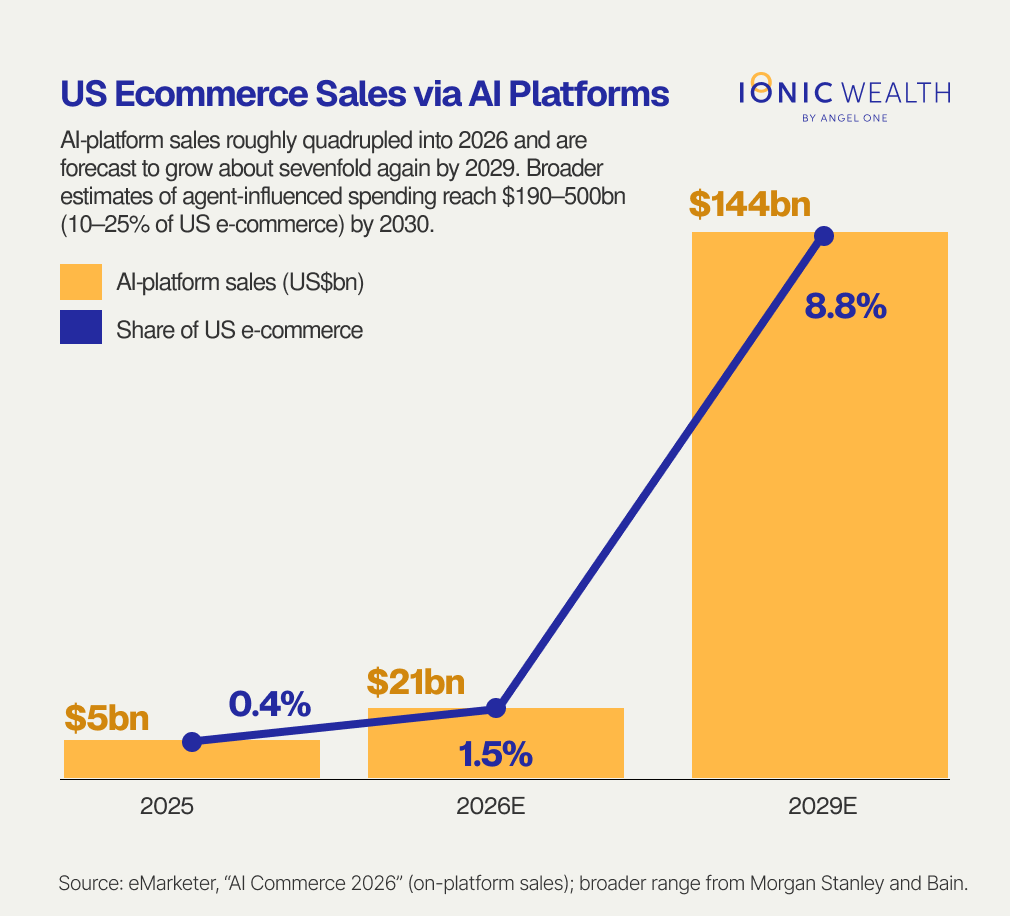
The card networks are building the rails. In June, the two largest networks moved within days of each other: Visa partnered with OpenAI to enable agent-based transactions inside its models, while Mastercard advanced its framework for machine-led payments. Each wants to be the trusted layer that authorizes an agent's payment, much as it authorizes a person's today.
Payment processors connect those rails to real shops. In 2025, Stripe co-developed the Agentic Commerce Protocol with OpenAI — the open standard behind ChatGPT's Instant Checkout, which lets shoppers buy from Etsy and Shopify merchants in the chat. More recently, Adyen launched its own service to let merchants sell through AI agents across the rival standards without rebuilding their systems.
The marketplaces are adapting, and it is already live. ChatGPT users in the US can already buy inside the chat, and Amazon's assistant Rufus can research products and complete purchases within its store. The open question is trust: in recent surveys, only about one in seven US consumers would let an AI agent place an order for them — a sign this is a multi-year shift, not an overnight one.
Ionic View
The shift worth watching is who sits in the middle of a purchase. For years that was a person navigating an app; increasingly it may be an AI agent acting on their behalf. We see the most durable beneficiaries as the trust-and-rails layer —the networks and processors paid on every transaction, whichever agent or merchant prevails — alongside the large marketplaces that own both the storefront and the checkout. The infrastructure being built this year is what a growing share of online buying will eventually run on.